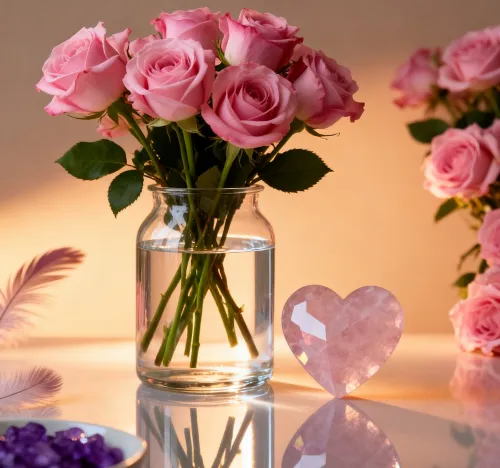
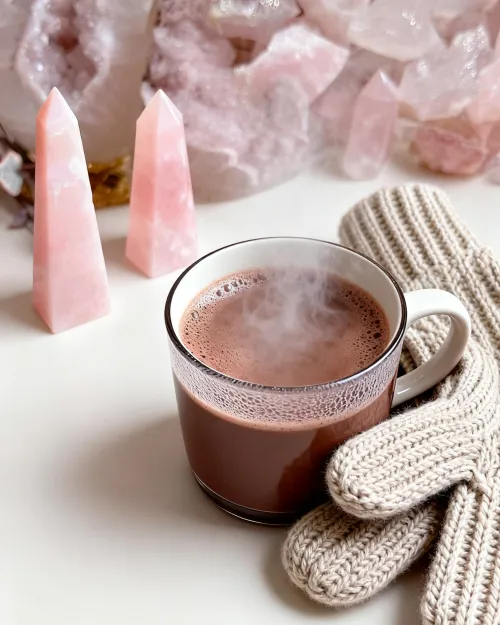
You’ve just bought that perfect rose quartz sphere for your meditation space—its gentle pink glow seems to whisper tranquility. As you place it near a sunlit window, a ripple of doubt hits: what if the afternoon sun beats down too intensely? Can this fragile beauty handle warmth at all? Well, maybe "fragile" isn’t the right word exactly… but crystal care isn’t always intuitive. Temperature shifts sneak into our daily rituals: steaming teacups nearby, that quick rinse under hot water, or even outdoor altars in blazing summers. Suddenly, your spiritual companion faces invisible threats. Let’s uncover how heat tangoes with rosy quartz—those scientific truths energy workers should know to keep their stones singing.
Your Quick Reference Guide
- Temperature Tolerance Fundamentals
- Safe Handling Guidelines
- Damage Warning Signs
- Long-Term Preservation Methods
- Thermal Stress Avoidance Techniques
- Material Science Insights
Temperature Tolerance Fundamentals
Imagine placing your rose quartz on a sun-drenched windowsill—innocent enough, right? The thing is, geology doesn’t play by interior design rules. That soft pink hue? It originates from trace minerals that react like mood rings to heat. At some point, every enthusiast learns what lab tests confirm: this crystal’s stability depends on slow adaptation.
Rose quartz may surprise you with moderate scratch resistance (thanks to its Mohs 7 rating), but thermal resilience operates differently. Its internal structure can start changing color permanently after prolonged exposure beyond 300°F—like fading sunlight bleaching fabric over years, only faster. Plus, trapped microscopic water within its matrix expands under heat. Think of boiling water cracking ice cubes; sudden expansion stresses fractures you can’t even see. Anyway, heat vulnerability isn’t random—it’s written in geological birthmarks from ancient Earth.
Safe Handling Guidelines
Caring for rose quartz isn’t just about avoiding disasters—it’s preserving the energetic resonance that drew you to it. You don’t need velvet gloves, just thermal awareness. Let’s explore three critical practices.
The Ambient Rule
Keep your crystal within 65–80°F ambient zones. That’s room temperature sweet spots. If moving it between environments (say, from chilly storage to a warm altar), allow 90 minutes buffer time in neutral spaces—letting mineral structures adjust avoids shocking them.
Water Safety Protocol
Rinsing under tap water seems harmless until you realize: direct contact with boiling water invites surface fissures in under 30 seconds. Always use lukewarm or cool water. Better yet? Misting cleanses without immersion risks.
Sudden Shift Prevention
Never place a cold crystal near radiant heat sources like lamps or heaters. That 100°F+ differential? It can cause immediate fracturing—like pouring hot tea into an icy glass. Thermostability means consistent transitions.
Damage Warning Signs
Your stone communicates distress long before it cracks outwardly. Sometimes, the universe nudges through subtle changes—micro-fractures whispering before they shout. Tune into these physical cues as spiritual red flags.
Notice whitish veining spiderwebbing inside? That’s thermal degradation turning crystalline clarity milky. And color fading isn’t just aesthetic loss—it signals molecular restructuring beyond 575°F. More dramatically, radiating crack patterns emerge around inclusions when thresholds break.
Here’s what to monitor in daily observations:
- Surface crazing: Iridescent web-like lines indicating dehydration damage
- Faded zones: Patches losing vibrancy proportional to heat exposure duration
- Temperature memory: Crystals feeling unusually warm hours after handling
Long-Term Preservation Methods
Consider this: sunlit meditation spaces demand strategy, not sacrifice. Your ritual spots needn’t become caves—just thoughtfully orchestrated. Preservation marries science with sacred intention.
Light Exposure Management
Morning light = safe glow. Afternoon scorch = threat. Use UV-filtering window films near display areas and rotate pieces weekly. Or place stones behind transparent water vessels—nature’s heat dispersion shield.
Altar Placement Intelligence
Distance matters. Maintain at least 3 feet from electronics emitting warmth. Elevate stones on woven mats or cork platforms—they insulate against surface heat better than metal or stone surfaces.
Seasonal Migration
Hot climates require summer rotations: move stones deeper inside homes when outdoor temperatures peak. Remember, cars become ovens—never transport crystals in parked vehicles.
A Gentle Consideration
Try this seven-day observation ritual: each morning, hold your rose quartz for one minute. Note its temperature, hue intensity, and any light refraction changes. Daily attentiveness transforms maintenance into meditation—building intuitive connection.
Thermal Stress Avoidance Techniques
Heat sneaks in disguised as "quick fixes"—that steaming bowl near your desk altar or a dashboard adornment. Thermal stress avoidance relies on anticipating what’s unseen.
Environmental Buffering
Create protection circles with insulating stones: chrysocolla or fluorite surrounding rose quartz absorb ambient temperature swings better than lone placements.
Handling Discipline
Warm hands before contact. Breath warmth onto cold stones gradually before skin touch instead of plunging them into heated spaces. Body heat transfer teaches gentle adaptation.
Heat-Spike Responses
Accidental exposure doesn’t mean doom. Immediately wrap the stone in room-temperature linen—never cold water—allowing gradual normalization. Sometimes slowing the change saves crystal integrity.
Material Science Insights
Geology whispers why rose quartz behaves this way. Compared to fused quartz (used in ovenware), natural rose quartz develops underground with imperfections—micro-fractures and inclusions creating structural vulnerabilities where heat concentrates.
Solar exposure accumulates micro-trauma too—thermal cycling expands then contracts crystals daily like breathing beyond natural rhythm. This cumulative stress explains garden stone deterioration over seasons. And while Mohs hardness suggests toughness, quartz carries weaknesses science maps clearly: specimens over 2 inches wide with jagged formations endure heat worse than small polished ones. Cradle that palm-sized sphere accordingly!
Finally, material insights reveal opportunities. Crystal lattice changes below damage thresholds still alter light refraction—subtly shifting energy properties valued in healing arts. Everything’s connected: care honors physics and metaphysics.